
Sciatica vs Piriformis Syndrome: What Sciatica Actually Is

Sciatica vs Piriformis Syndrome: What Piriformis Syndrome Actually Is

Sciatica vs Piriformis Syndrome: Where the Pain Actually Shows Up

Sciatica vs Piriformis Syndrome: What Makes Each One Worse

Sciatica vs Piriformis Syndrome: Self-Checks You Can Try at Home
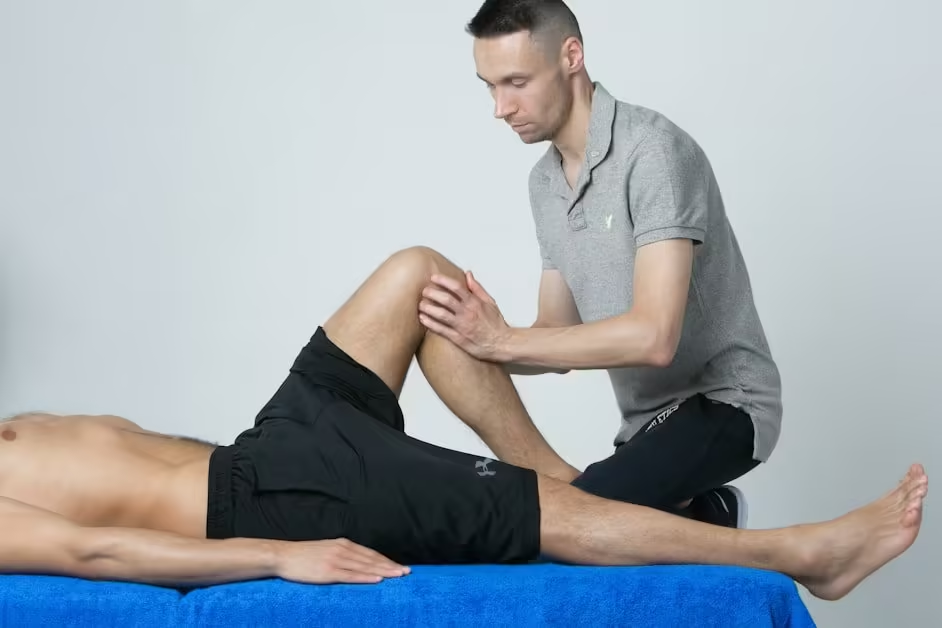
Neither of these is a substitute for a real diagnosis, and a good clinician will use several tests together rather than relying on one, but they can give you a sense of which direction the sciatica vs piriformis syndrome question is leaning for you. The straight leg raise is the classic test for disc-related sciatica: lie on your back, keep your knee straight, and have someone slowly lift your leg. If pain shoots down the leg somewhere between 30 and 70 degrees of elevation, that reproduces the nerve tension pattern typical of a herniated disc pressing on a nerve root. The FAIR test (flexion, adduction, and internal rotation) is more specific to piriformis involvement: lying on your side with the affected leg bent at the hip and knee, someone gently rotates that leg inward while pressing on the buttock. Pain reproduced in the buttock during this maneuver, especially without much radiation past the knee, points toward the piriformis muscle rather than the spine. If pressing directly on the middle of the buttock reproduces or worsens your usual pain, that’s another data point in the same direction.Sciatica vs Piriformis Syndrome: How a Doctor Actually Sorts It Out
Because the two conditions overlap so much on paper, getting an accurate diagnosis usually takes more than a five-minute exam. A doctor or physical therapist will typically start with a detailed history: where exactly the pain starts, how far it travels, what specific movements trigger it, and whether you have any numbness, weakness, or changes in reflexes, since true nerve root compression from a disc can affect reflexes in a way that isolated piriformis involvement usually doesn’t. From there, a physical exam combining the straight leg raise, the FAIR test, and direct palpation of the buttock helps narrow things down, and imaging may follow. An MRI can confirm or rule out a herniated disc, spinal stenosis, or other structural cause of true sciatica, while piriformis syndrome is still considered largely a diagnosis of exclusion, meaning it’s often confirmed by ruling out spinal causes rather than by a single definitive scan. If your prior workup already ruled out a herniated disc but your sciatica-like pain hasn’t budged, that’s exactly the scenario where piriformis involvement deserves a closer look.Sciatica vs Piriformis Syndrome: What Actually Helps Each One
Treatment for disc-related sciatica generally centers on reducing nerve root irritation and restoring normal spinal mechanics: activity modification in the acute phase, targeted physical therapy, and movements like pelvic tilts for lumbar mobility once the sharpest pain has settled. Most cases improve within six weeks with conservative care, and Mayo Clinic notes that surgery is reserved for the minority of cases involving significant weakness, loss of bowel or bladder control, or pain that hasn’t responded to months of nonsurgical treatment. Piriformis syndrome responds better to a different toolkit: stretching and releasing the piriformis and surrounding hip rotators, correcting the sitting posture or repetitive movement pattern that’s overloading the muscle, and gradually strengthening the glutes so the piriformis isn’t compensating for weaker muscles around it. A short daily stretching routine focused on the hips and lower back combined with alternating sitting positions throughout the day is often enough to bring flare-ups under control within a few weeks. Heat before stretching and ice after activity both help settle the muscle irritation for many people, though what works varies person to person.When It Might Be Neither One
Buttock and leg pain can also come from sacroiliac joint dysfunction, hip osteoarthritis, or a hamstring tendon issue, all of which can mimic parts of the sciatica-versus-piriformis picture. This is one more reason self-testing at home is useful for narrowing things down but isn’t a replacement for an actual exam, particularly if the pain pattern doesn’t cleanly match either mechanical back pain or a nerve-specific story. A clinician who examines the hip joint itself, not just the sciatic nerve pathway, can usually rule these alternatives in or out fairly quickly.Frequently Asked Questions
Can piriformis syndrome turn into sciatica?
Piriformis syndrome doesn’t turn into disc-related sciatica since they have different underlying causes, but it does produce sciatica-like symptoms because it compresses the same sciatic nerve, just at a different point along its path. Some clinicians describe piriformis syndrome as a cause of “nondiscogenic sciatica” precisely because the symptom pattern overlaps so heavily even though the spine isn’t involved.
How long does piriformis syndrome usually take to heal?
Most cases improve within a few weeks to a couple of months with consistent stretching, activity modification, and physical therapy, though it can become chronic if the underlying trigger, like prolonged sitting or a repetitive movement pattern, isn’t addressed alongside the symptoms.
Is walking good or bad for piriformis syndrome?
Gentle, pain-free walking is generally fine and can help keep the hip and glute muscles from stiffening further, but activities that involve a lot of hip rotation or sustained sitting immediately before or after, like a long run or a long drive, tend to aggravate it more than a short, easy walk would.
Can an MRI settle the sciatica vs piriformis syndrome question?
An MRI is good at confirming or ruling out a herniated disc, spinal stenosis, or other structural cause of true sciatica, but it’s much less reliable for piriformis syndrome, which frequently shows a normal MRI even when the muscle is clearly the source of the pain. That’s part of why piriformis syndrome is often diagnosed through physical exam and by ruling out spinal causes rather than through imaging alone.
What’s the fastest way to relieve piriformis pain at home?
A seated or lying piriformis stretch, alternating with several minutes of gentle heat, tends to bring the fastest short-term relief for most people, along with getting up to move every 30 to 45 minutes if you’ve been sitting. Consistency over several days matters more than any single stretch session.
The Bottom Line
Sciatica vs piriformis syndrome comes down to where the nerve compression starts: sciatica originates at the spine, piriformis syndrome originates at a muscle deep in the buttock, and the overlap in symptoms is what makes them so easy to confuse. Paying attention to exactly where your pain concentrates, what specifically makes it worse, and whether pressing on your buttock reproduces it can point you in the right direction before you even see a provider. If home stretching and activity changes haven’t moved the needle after a few weeks, or if you notice new weakness, numbness that’s spreading, or any change in bladder or bowel function, it’s time to get an actual exam rather than keep guessing. Getting the right diagnosis is what determines whether stretching the piriformis or addressing a disc problem is actually going to fix things.Related Articles
- How to Sleep Comfortably with Sciatica During Pregnancy
- Mechanical Back Pain vs Serious Back Pain: How to Tell the Difference
- How to Relieve Upper Back Pain Between Shoulder Blades at Home
Sources
- Mayo Clinic. Mayo Clinic.
- PubMed, NIH. pubmed.ncbi.nlm.nih.gov.


