
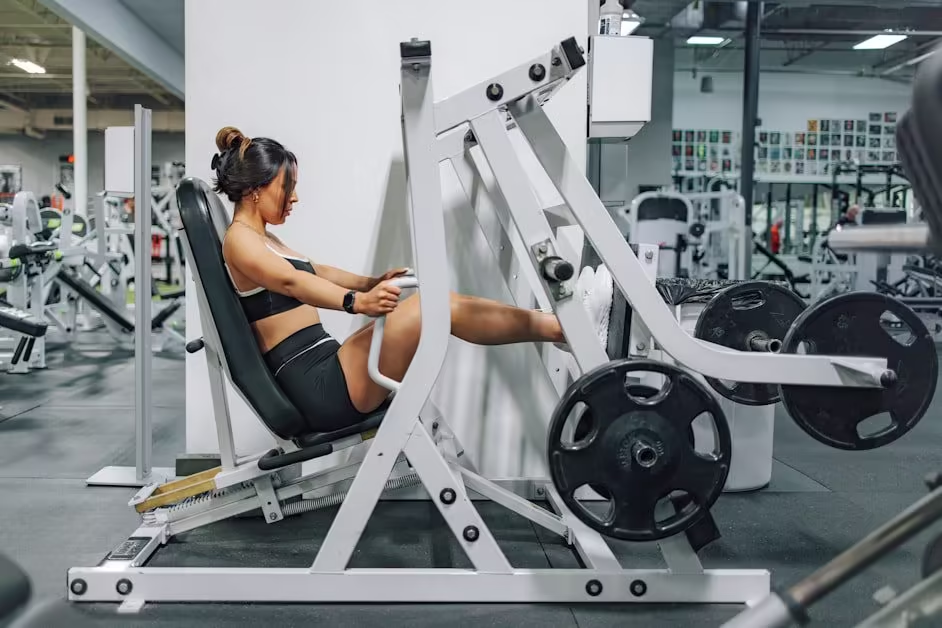
To make each gym session count, it helps to build your plan around the exercises that burn the most calories.
A gym workout plan for weight loss for women works differently than generic calorie-burning programs because women’s hormonal environment, muscle fiber distribution, and metabolic response to resistance training differ from men’s in ways that directly affect what gets results. This guide gives you a practical 8-week gym plan built around those differences, not around a male-default fitness template with a pink logo. The core principle: fat loss in women is driven by building metabolically active muscle tissue through progressive resistance training, not by burning maximum calories in any single session. Chronic cardio without resistance training leads to muscle loss alongside fat loss, which drops your resting metabolic rate and makes future fat loss harder. The plan below avoids that trap.Why Resistance Training Beats Cardio for Women’s Fat Loss

The 8-Week Gym Workout Plan for Weight Loss for Women

Phase 1: Weeks 1-4 (Foundation)
Three full-body sessions per week. 3 sets of 12 reps per exercise. Rest 60 seconds between sets. Focus entirely on movement quality. Session A (Monday):- Goblet squat – 3 x 12
- Dumbbell Romanian deadlift – 3 x 12
- Seated cable row – 3 x 12
- Dumbbell shoulder press – 3 x 12
- Glute bridge – 3 x 15
- Plank – 3 x 30 sec
- Leg press machine – 3 x 12
- Dumbbell incline press – 3 x 12
- Lat pulldown – 3 x 12
- Walking lunges – 3 x 10 per leg
- Hip thrust – 3 x 15
- Dead bug – 3 x 8 per side
- Bulgarian split squat – 3 x 10 per leg
- Dumbbell row – 3 x 12
- Cable chest fly – 3 x 12
- Step-ups (weighted) – 3 x 10 per leg
- Tricep pushdown – 3 x 12
- Side plank – 3 x 20 sec per side
Phase 2: Weeks 5-8 (Progressive Overload)
Same three sessions, same exercise selection. Increase weight on any exercise where you completed all reps cleanly in week 4. Add one set to each primary compound movement (4 sets instead of 3). Reduce rest periods to 45-60 seconds on isolation exercises. This simple progression, adding load or sets without changing exercises, is what drives continued fat loss results in weeks five through eight when motivation typically drops and progress can stall if the stimulus does not increase.How Much Cardio to Add for Faster Fat Loss

The Nutrition Foundation That Makes This Plan Work

How Your Hormonal Cycle Affects Fat Loss at the Gym
This is the variable no generic gym workout plan for weight loss addresses. Your fat-burning efficiency, strength output, and recovery all shift across your menstrual cycle in predictable patterns. In the follicular phase (days 1-14), estrogen is rising. Fat oxidation is higher during aerobic exercise in this phase because estrogen enhances lipase activity, the enzyme that releases fat from fat cells for use as fuel. This is your most efficient fat-burning window for cardio. In the luteal phase (days 15-28), progesterone rises and shifts your body toward using carbohydrates as the preferred fuel source during exercise. Cravings increase due to the progesterone-driven rise in basal metabolic rate (by approximately 100 to 300 calories per day in the late luteal phase) and the GABA receptor withdrawal effect that drives carbohydrate cravings. This is not willpower failure. It is biology. Increasing protein intake in the late luteal phase reduces cravings by stabilizing blood sugar more effectively than carbohydrate-heavy eating. Practical application: schedule your HIIT sessions in the follicular phase when recovery is fastest and fat oxidation is highest. In the late luteal phase, swap HIIT for LISS and focus on strength maintenance rather than new personal records.Tracking Progress Beyond the Scale
The scale is the least informative measure of progress for women doing resistance training. In the first four to six weeks, it is common for scale weight to remain flat or even increase slightly as muscle tissue develops and glycogen storage increases in newly trained muscles. This is progress, not failure. Better progress markers for a gym workout plan for weight loss for women:- Strength: are you lifting more weight or completing more reps than last week?
- Measurements: waist, hip, and thigh circumference measured every two weeks
- How clothes fit across the hip and waist
- Energy levels and gym performance week over week
- Sleep quality and recovery speed between sessions
Frequently Asked Questions
How many days a week should a woman go to the gym to lose weight?
Three strength sessions per week is the most effective starting point for a gym workout plan for weight loss for women. This frequency builds muscle mass, elevates resting metabolism, and allows adequate recovery. Adding two to three light cardio sessions (walking) on rest days accelerates fat loss without impairing strength training recovery.
What gym exercises burn the most fat for women?
Compound resistance exercises burn the most fat for women over time because they build the most muscle mass. Squats, deadlifts, hip thrusts, rows, and presses all engage multiple large muscle groups simultaneously, producing the highest hormonal and metabolic response per session. Single-muscle isolation exercises like bicep curls burn fewer calories and contribute less to resting metabolic rate than compound movements.
Should women do weights or cardio first for weight loss?
Weights first. Performing resistance training before cardio ensures your strength session happens with full glycogen stores and maximal nervous system readiness. Running before lifting depletes glycogen and pre-fatigues the muscles you need for compound movements, reducing both the quality and safety of your strength work. If doing both in one session, lift first and do a short cardio finisher afterward.
How long does it take to see results from a gym workout plan?
Strength increases typically appear within two to three weeks for beginners as neuromuscular efficiency improves. Visible body composition changes (reduced measurements, better-fitting clothes) generally appear at weeks six to eight with consistent training and a modest calorie deficit. Scale weight changes are the least reliable indicator and may lag behind actual fat loss by several weeks due to muscle development and water retention fluctuations.
Is it better to work out on an empty stomach for weight loss?
No, for most women doing resistance training. Fasted training may slightly increase fat oxidation during the session but impairs strength output and post-exercise muscle protein synthesis, reducing the long-term fat loss benefit of the session. A small pre-workout meal with protein and carbohydrates 60 to 90 minutes before training produces better performance and better recovery than training fasted.
Conclusion
A gym workout plan for weight loss for women that actually works is built on progressive resistance training three days per week, a protein-first nutrition approach, and an understanding of how your hormonal cycle shapes your fat-burning efficiency and recovery across the month. Eight weeks of this plan, applied consistently with progressive overload, will produce measurable strength improvements and visible body composition changes that cardio-only approaches cannot match. The scale will not tell the full story. Track your strength numbers, your measurements, and your energy levels alongside it. Those three data points together give you an honest picture of progress that motivates you to continue past the initial plateau where most people quit. Medical disclaimer: This article is for informational purposes only and does not constitute medical advice. Consult a qualified healthcare provider before beginning any new exercise or weight loss program, particularly if you have existing health conditions.Related Articles
- Best Home Workout Plan for Women Beginners: 4-Week Starter Guide
- Upper Body Workout for Women at Gym: The Essential Guide
- Glute Workout at Gym for Women: Build Stronger Glutes in 8 Weeks
Sources
- NCBI, NIH. Effects of Resistance Exercise on Bone Health.


