
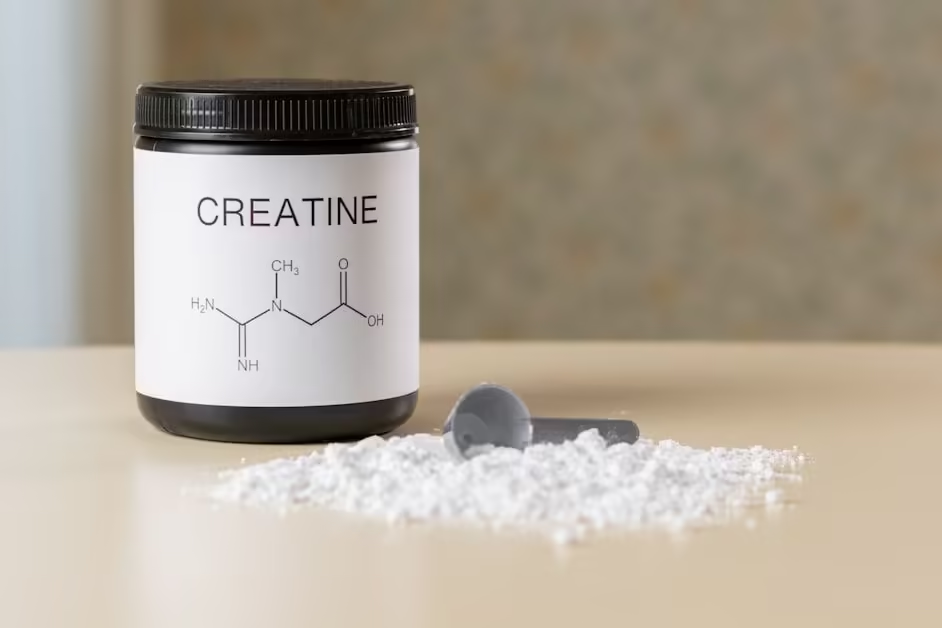
Creatine is not the only thing that nudges the scale for reasons that have nothing to do with fat; our post on why weight jumps after a cheat day covers the other big one.
If you have looked into creatine for women over 40, you have probably waded through a lot of supplement ads dressed up as advice. This is not that. Creatine is one of the most researched supplements in existence, and the honest picture is genuinely useful for women in their forties and beyond: some benefits are well proven, others are promising but early, and a few popular claims are simply marketing. This guide separates the three so you can decide whether creatine for women over 40 belongs in your routine, and if so, how to use it without wasting money on fancy versions.Why Creatine for Women Over 40 Is Worth a Look

What the Research Actually Shows (and What It Doesn’t)

Best Type of Creatine: Why Monohydrate Wins

How Much Creatine to Take (and Why You Can Skip Loading)

Creatine, Muscle, and Strength After 40
This is where the evidence is strongest, with one important condition: creatine only helps if you are training. It works by helping your muscles do a little more hard work, which over weeks and months adds up to greater strength and lean muscle than training alone would produce. Without resistance training, a scoop of creatine does very little. Be realistic about the size of the effect. In women the gains tend to be steady rather than dramatic, and longer programs of six months or more show the clearest benefit. Pairing creatine with a consistent lifting routine is the winning combination, and if you want the training side mapped out, our post on strength training for women over 40 lays out where to start. Creatine for women over 40 amplifies good training, it does not substitute for it.Creatine and Bone Health in Menopause
Bone is the area everyone hopes creatine will help, and the honest answer is that it is encouraging but not proven. A 12-month trial of postmenopausal women doing supervised resistance training, published in Medicine and Science in Sports and Exercise, found that adding creatine helped preserve bone at the hip and improved a marker of bone strength compared with training alone. That said, not every study agrees, and some longer trials have found no meaningful change in bone density, so creatine should not be treated as a substitute for proven bone care. The sensible read is that creatine may support bone as part of a resistance-training program, but it is not a stand-alone osteoporosis treatment. Keep doing the things with strong bone evidence, including regular loading exercise, which our guide to vitamin D and bone health in women covers alongside this.Creatine, Brain Fog, and Mood
The brain angle is the newest and most preliminary, so hold it loosely. Your brain uses creatine for energy too, and the early research suggests any cognitive benefit shows up mainly when the brain is under stress, such as during sleep deprivation, or in older adults who may start with lower stores. A 2024 review of the trials found small improvements in areas like memory and processing speed, but no clear effect on overall thinking or executive function. For a woman in perimenopause dealing with brain fog and broken sleep, that is a reasonable maybe, not a promise. It is fair to say creatine might help on that front, especially when sleep is poor, but the evidence is not strong enough to take it for cognition alone. Treat any mental clarity you notice as a possible bonus on top of the muscle and strength benefits that are actually well established.Will Creatine Make You Bulky or Cause Weight Gain?
This is the fear that stops many women from trying it, so let us be precise. When you start creatine, the scale may rise by a couple of pounds in the first weeks. That weight is water drawn inside your muscle cells, not fat, and not the puffy under-the-skin bloating people worry about. It is a sign the creatine is doing its job of saturating the muscle. Creatine will not make you bulky. Building large amounts of muscle takes years of dedicated training, and women generally see smaller absolute changes than men, made harder still by lower estrogen after 40. What most women notice is feeling stronger and looking a little more toned, not bigger. If the scale number bothers you, track how your clothes fit or use our body fat calculator instead, since it separates real changes from water weight, and you can build a free plan around your own numbers if you want the full picture.Is Creatine Safe, and Who Should Check First?
For healthy adults, creatine has one of the best safety records of any supplement. The ISSN position stand concludes there is no compelling evidence that creatine harms healthy people, including no evidence of harm to the kidneys, even with long-term use. The old rumor about creatine and kidney damage simply has not held up in the research on healthy individuals. That said, safety data is thinner for some groups, so check with your doctor before starting if you are pregnant or breastfeeding, or if you have kidney disease, liver disease, diabetes, or bipolar disorder. Mild stomach upset is the most commonly reported side effect, and it is reported less often with food and without a loading phase. Used sensibly, creatine for women over 40 is about as low-risk as supplements get, but a quick conversation with your provider is always the right call if you have a health condition.Frequently Asked Questions
Should women over 40 take creatine?
If you do any resistance training and want to support muscle and strength as you age, creatine is one of the few supplements with strong evidence behind it and a very good safety record. It is not essential, and it does little without training, but for active women over 40 it is a reasonable, low-risk addition. If you never lift, the benefit is much smaller.
Does creatine cause belly fat or bloating?
No. Creatine does not add body fat. Any early weight gain is water stored inside the muscle, not fat and not the under-the-skin bloating people picture. With food and without a loading phase, digestive discomfort is reported least often.
What is the best time of day to take creatine?
Timing barely matters. What counts is the daily 3 to 5 grams used in the research, which is what keeps muscle stores saturated. Pick a time you will remember, whether that is with breakfast, in your coffee, or around your workout, and stay consistent.
Is creatine safe for your kidneys?
In healthy people, yes. Large reviews including the ISSN position stand have found no evidence that creatine harms kidney function, even over years of use. If you have existing kidney disease or another chronic condition, check with your doctor first.
The Bottom Line
Creatine for women over 40 is one of the rare supplements that earns its reputation, as long as you keep your expectations honest. Paired with resistance training it reliably supports strength and lean muscle, its safety record is excellent, and plain monohydrate at 3 to 5 grams a day is all you need. The bone and brain benefits are promising but not yet proven, so treat them as possible extras rather than reasons to start. Skip the loading phase, skip the expensive forms, keep lifting, and give it a few months. That is the whole honest playbook.Related Articles
- Best Multivitamin for Women Over 40: What to Look For and Why It Matters
- Best High Protein Breakfast for Weight Loss Women Over 40
- Weight Loss Plateau Women Over 40: Why It Happens and How to Break It
Sources
- PubMed Central, NIH. Creatine in women’s health: bridging the gap from menstruation through pregnancy to menopause.
- PubMed Central, NIH. International Society of Sports Nutrition position stand: safety and efficacy of creatine supplementation in exercise, sport, and medicine.
- PubMed, NIH. pubmed.ncbi.nlm.nih.gov.


